ryo77160@gmail.com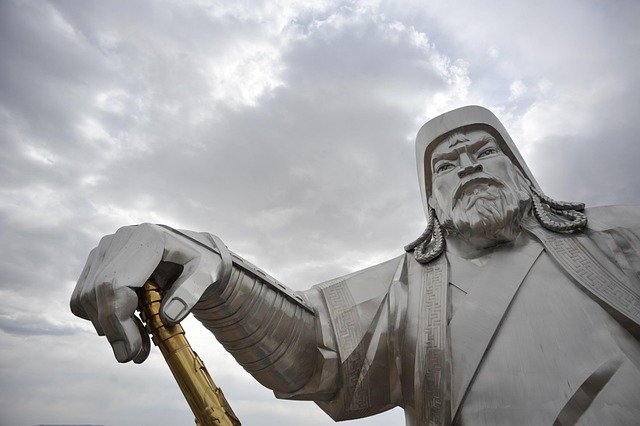
The Mongol Empire was one of the most powerful and expansive empires the world has ever seen. Founded by the legendary warrior Genghis Khan in the early 13th century, it transformed the political, cultural, and economic landscape of Eurasia, connecting the East and West through vast trade routes and cultural exchange.
Let’s explore the rise, achievements, and legacy of this incredible empire.
1. Origins and Rise of the Mongol Empire
Before the rise of the empire, the Mongols were a collection of nomadic tribes roaming the steppes of Central Asia. In 1206, Temujin was proclaimed Genghis Khan, meaning “Universal Ruler,” uniting the tribes under his leadership.
Under his command, the Mongols began a series of military campaigns that would expand their territory at an unprecedented speed, conquering vast regions across Asia and into Europe.
2. Territorial Expansion
At its height, the Mongol Empire stretched from:
- China and Korea in the East,
- Across Central Asia and Russia,
- Into the Middle East,
- Reaching as far as Eastern Europe.
This made it the largest contiguous land empire in history, covering over 24 million square kilometers.
The empire was later divided into several khanates, including the:
- Yuan Dynasty in China,
- Golden Horde in Russia,
- Ilkhanate in Persia,
- Chagatai Khanate in Central Asia.
3. Military Tactics and Innovations
The Mongols were renowned for their brilliant military strategies, including:
- Highly mobile cavalry archers,
- Superior horse-riding skills,
- Effective use of psychological warfare,
- Efficient communication through relay posts called Yam,
- Incorporation of conquered peoples’ expertise and technologies.
Their adaptability and organization allowed them to defeat much larger armies.
4. Governance and Administration
Despite their fearsome reputation, the Mongols established a sophisticated system of governance:
- They promoted religious tolerance across their diverse empire.
- Implemented laws called the Yassa, focusing on loyalty and order.
- Facilitated trade and communication through the famous Silk Road, protecting merchants and travelers.
- Encouraged cultural exchange, science, and technology between East and West.
5. Cultural Impact and Legacy
The Mongol Empire reshaped the world in many ways:
- It connected Europe and Asia like never before, leading to increased trade, including the spread of silk, spices, and ideas.
- Helped spread technologies such as gunpowder, paper, and compass westward.
- Influenced art, literature, and architecture across the regions they ruled.
- Their legacy is still evident in modern countries like Mongolia, China, Russia, Iran, and others.
6. Decline of the Mongol Empire
After Genghis Khan’s death in 1227, his successors expanded the empire further but also faced challenges:
- Internal conflicts among khans,
- Difficulty governing such a vast territory,
- The rise of powerful local kingdoms and dynasties.
By the late 14th century, the empire had fragmented into smaller states, though its influence persisted for centuries.
7. Interesting Facts About the Mongol Empire
- Genghis Khan’s real name was Temujin.
- The empire’s postal system allowed messages to travel faster than any contemporary system.
- The Mongols were known for religious tolerance and often adopted customs from conquered peoples.
- The Pax Mongolica (“Mongol Peace”) created a period of stability and safety along the Silk Road.
Conclusion
The Mongol Empire was more than just a military powerhouse — it was a transformative force that connected continents, facilitated cultural exchange, and reshaped history. From the steppes of Mongolia to the heart of Europe, its legacy continues to fascinate and influence the world.